


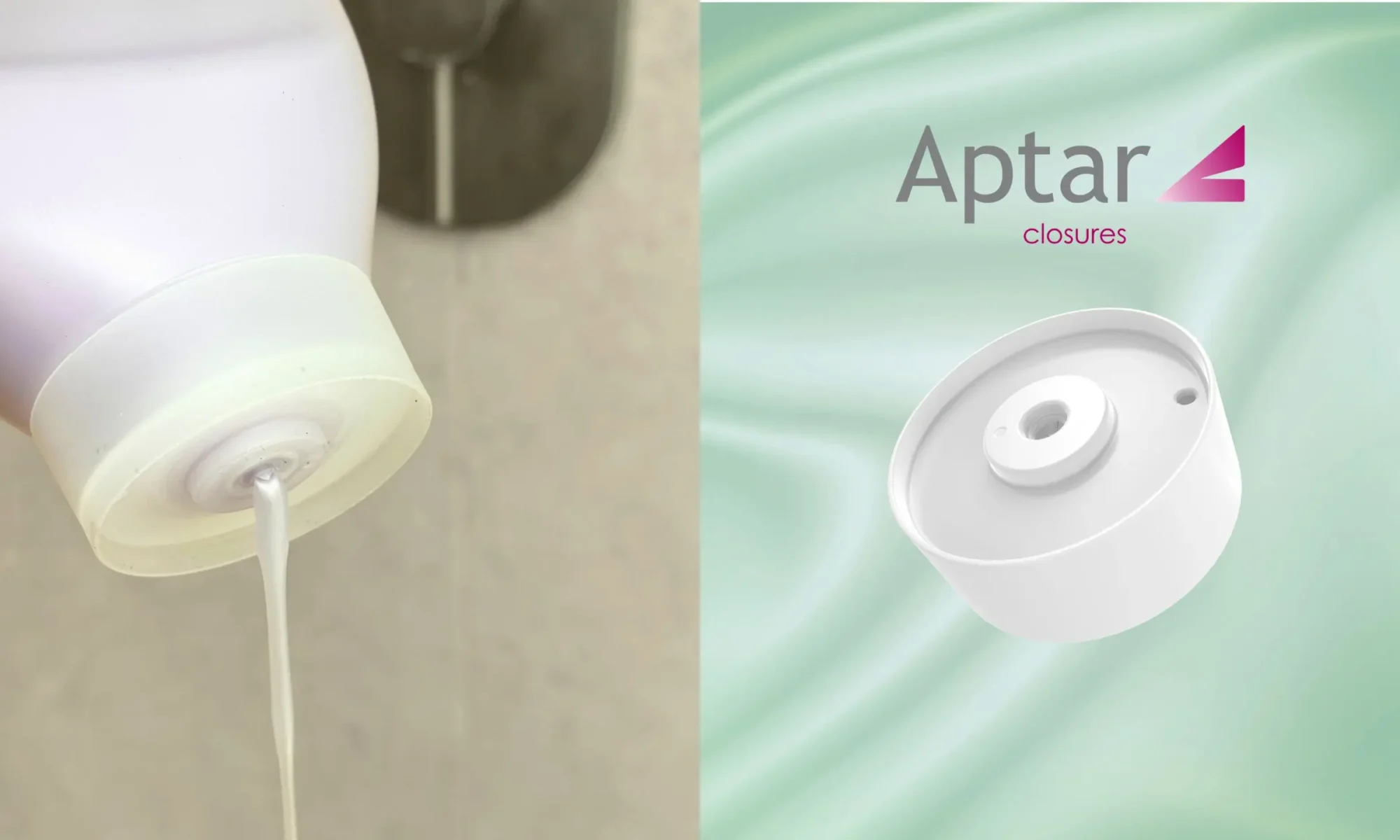

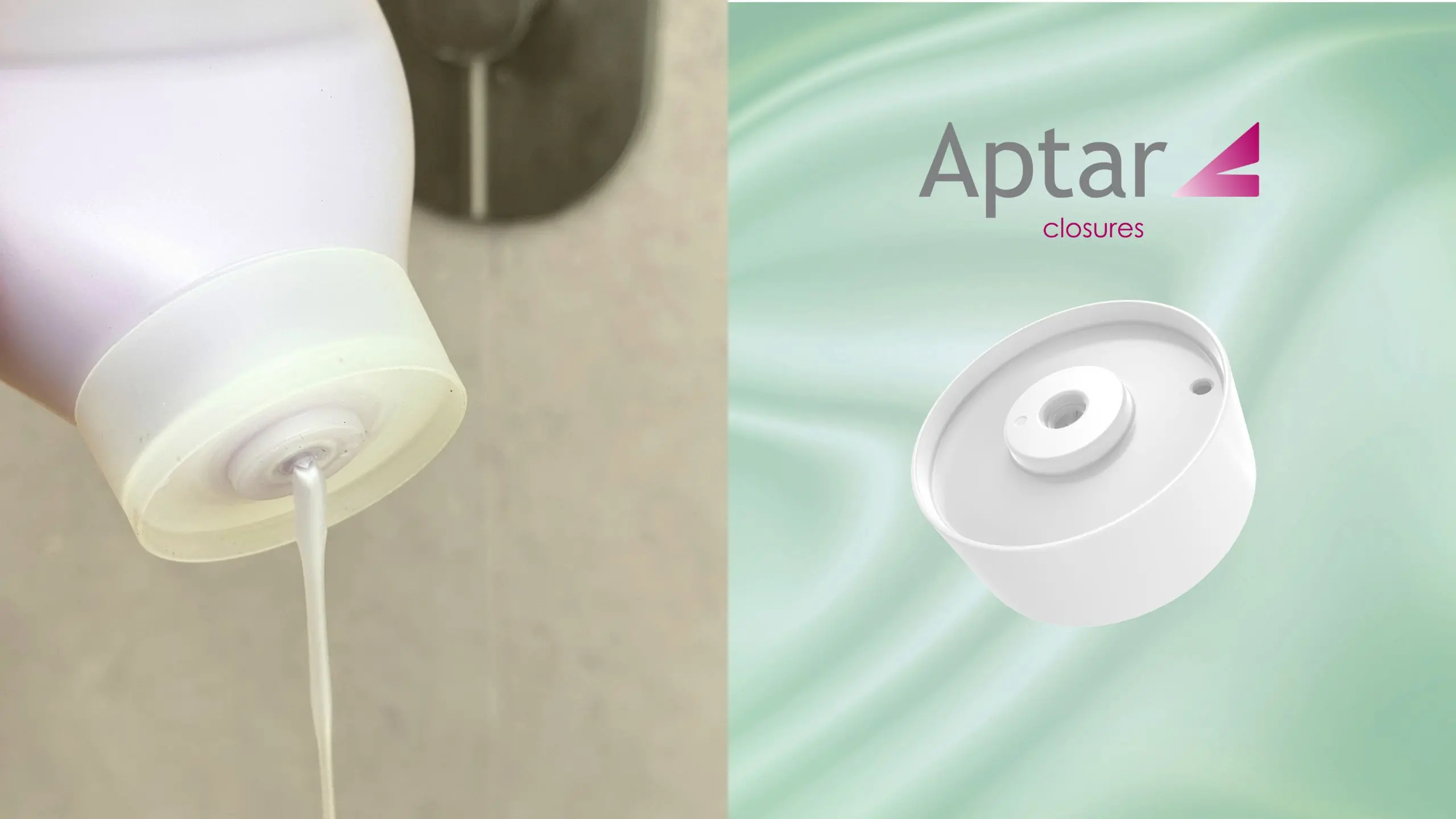
AptarGroup has introduced a new inverted lidless dispensing closure portfolio, focused on simplifying pack architecture while improving dispensing functionality in beauty and personal care applications.
The design eliminates the need for a separate cap or lid, enabling an inverted, ready-to-dispense packaging format where the closure remains open but controlled. This is achieved through the integration of valve-based technology, allowing product flow while maintaining hygiene and preventing leakage.
From a packaging design perspective, the concept reduces component complexity by consolidating multiple elements into a single closure system. This can support material reduction, simplified assembly, and fewer moving parts, while also enabling more streamlined pack formats for brands.
The inverted configuration positions the product for immediate use, removing the need for opening and reclosing steps. This supports single-handed dispensing and aligns with evolving user-experience requirements in categories such as skincare, haircare, and home care.
The system is based on Aptar’s SimpliSqueeze valve technology, which delivers controlled product flow and clean cut-off, addressing issues such as dripping and residual product build-up commonly associated with conventional closures.
In packaging development terms, the lidless architecture reflects a broader shift towards integrated functional design, where dispensing performance, user convenience, and pack simplification are addressed within a single component. It also indicates movement away from multi-part closures towards solutions that combine sealing and dispensing functions.
The portfolio is positioned for use across beauty, personal care, and potentially home care formats, where differentiation is increasingly driven by packaging usability, hygiene, and format innovation rather than material alone.